Introducing ‘What To Read’

I have several articles on my notepad for the time to come, but for some reason, none of them will allow themselves to be written at the moment. Partly for that reason, I’m happy to introduce What To Read, a guide to what I’m reading while waiting for my creative oomph to return.

As I hope regular readers have noticed already, I’m kind of passionate about things. And since I don’t want to be alone with my passions – be they politics, pop culture, media criticism, gender issues, music, soccer or anything else – I’ve decided to gather up a collection of noteworthy links and stories for our common enjoyment. Continue reading

Posted in Entertainment | Tagged | 5 Comments

This Time ‘In Living Cover’, It’s Jay Brannan

Correction, July 26: This post originally misquoted a lyric from the song Drowning. The error has now been revised. I would like to thank reader James for pointing it out.

Despite that I first heard his 2008 release, Goddamned, only two months ago, 2009 has already become a Jay Brannan year for me. I’m not sure if it shone through brightly enough in my first post on this very talented singer/songwriter, but that is the best way I could come up with to describe how much his immediately accessible, beautiful, strange and durable songs have come to mean to me. It feels like I’ve known them forever, until I realize I’m actually post-rationalizing: I only wish I’d known them forever, because they would have made sad moments in the past all the more teachable and, even, more bearable, with their common-sense therapeutic misanthropy and confusingly soft-sung snarkiness, and the light moments more darkly funny, highlighting the elusive and absurd nature of even the most affectionate  acts of human interaction. Continue reading

Posted in music | Tagged | 11 Comments

Did ‘Total Eclipse’ Deserve Leonardo DiCaprio?

If you remember back to my Young Leonardos post last December, you’d know that actual physical resemblance to Leonardo DiCaprio was only of the criteria to qualify for inclusion (although admittedly, it was the most important one). Since Leo is one of my definitive favorite actors, another criteria was that, like him, contenders had to have shown a certain willingness to not only choose safe and predictable roles suitable for pretty-boys looking for a shortcut to super-stardom. Continue reading

Posted in gay, movies | Tagged , , | 11 Comments

Early Gay Crushes: Jesse McCartney

Technically, I suppose that including Jesse McCartney in the Early Gay Crushes series would have to mean that anyone I might have had a celebrity crush on before I admitted to myself that I was gay would now be eligible. I first noticed him in the summer of 2005, a couple of months before my twentieth birthday, but still more than a year before I came out to myself and others. When he’s nevertheless included here, it’s because he’s certainly one of the most important ones, and, judging from his impressive one year run on the Sexiest Males Alive list (he’s the only to never have been lower than #4), one of the most enduring, too. Continue reading

Posted in Entertainment, gay, music | Tagged , , , | 13 Comments

What I Learned From ‘Into The Wild’, The Fourth Time Around

This is an expanded and revised version of a review that first appeared online in March 2008. This piece was updated July 5, with new paragraphs on the psychoanalytical angle and the possible idealization of Chris McCandless’ destiny.

***

It feels about right to do a write-up on Sean Penn’s Into the Wild on the Fourth of July, not only for it’s quintessentially American optimism and embrace of the adventurous and heroic individual, but also for being one of the most geographically wide-ranging cinematic celebrations of the American heartland ever captured on film.

I say this as a guy who nurtures an almost insurmountable skepticism toward movies about the brave individual who battles nature in search of survival and/0r some higher purpose. So deeply rooted was my skepticism, that after having watched and loved Into The Wild the first time around, I half-assumed that it had more to do with my still developing Emile Hirsch crush than with the movie itself.  Previous experience told me that I was too much of a cynic to embrace the almost Romanticist idealism of Into The Wild, particularly since it was directed by Sean Penn, a man famous for creating transparently self-righteous and moralistic movies in the vein of The Pledge. But now, having watched it a second, third and even fourth time, I have learned to appreciate exactly the things about it that I thought I would hate. It’s frequently more subtle and multi-layered than expected, and even where it fails to create the necessary emotional and intellectual distance, it still succeeds in asking a lot of interesting questions. All this, of course, without failing to capitalize generously on my satisfaction with getting to see Emile Hirsch push his well-honed body to its physical limits.

Into The Wild has been accused of idealizing what could be argued to be Chris’ quite irresponsible break with his family and society at large, and even his death. but that doesn’t mean it doesn’t ask intriguing and interesting questions. Excuse me for repeating myself, but like so many other great movies, Into the Wild is just as interesting for its flaws as for its triumphs. In her fairly positive review, Slate’s Dana Stevens led my attention to a flaw that I had somehow ignored in my initial response to the movie. Here, she points out how cheap unconvincing – even unnecessary – the subplot about Chris’ supposedly abusive father (contradicted in the Jon Krakauer book the movie is based upon) is:

In an attempt, perhaps, to justify Chris’ decision not to communicate with his parents for more than two years (…) Penn inserts a flashback back story that shows the McCandless’ relationship as abusive and violent. It’s a Lifetime TV rule that this movie should have risen above: Every questionable moral action must be explained by an equal and opposite childhood trauma. In Krakauer’s account, McCandless’s father, Walt, was something of a remote perfectionist but certainly no wife-beater

By ultimately doubling down on the psychoanalytical angle, he in my opinion makes Chris a less interesting character than he really was. Of course, the task of making us accept Chris’ radical quest would have been made even harder if such emotional shorthands were not used, but it would had been better in keeping with the mystification of human nature and the glowing individualism that movies embraces in other key scenes. The questions to come from such an approach might have been even more interesting.

That said, I’m not sure if I’m the right guy to give such advice. I suspect it would have taken me some time to accept his ambition no matter how clear or unclear his reasons might have been presented to us: He’s stubborn, convinced and idealistic, sure, but isn’t he also something of a self-absorbed egotist, a little too aware of his place in history? The intellectual and emotional tension that this feeling creates only heightens when he encounters the hippie couple Jan and Rainey (played by Catherine Keener and Bryan Drieker, respectively). While generally sympathetic to his project, they are the first two people to seriously challenge his reasoning. Jan, instantly inserting herself as a mother figure to Chris, tells him of the pain she struggles with every day, due to having a son who took off just like him,  and urges him to re-establish contact with his family (‘You look like a loved kid’, she says). The fact that Jan uses what’s perhaps the most provocative source of knowledge at her disposal – her life experience and the perception that with age comes wisdom – of course makes it easier for an unrepentant individualist like Chris to dismiss, but it nonetheless spells out the most interesting question of the whole movie: Who are you responsible for?
Some would hold him responsible for the pain and sadness he inflicts on his family, but even if the answer is that his only responsibility is himself, then shouldn’t he at least be responsible for leading a life that would bring him satisfaction without running the risk of killing himself? It may be frustrating to Chris, but he receives several warnings and advice along the way, even from people initially sympathetic to his dream of independence and self-realization.

But in a sense they all know, even the old and lonely Ron (magnificently portrayed by Hal Holbrook), whom Chris meets in the mountains of North Dakota, that the young man’s steely resolve will not bow to anything or anyone. Chris is happy to receive advice, but he will only follow it if fits in with his own perspective. Therefore, it is Ron who, after having had a deeply moving conversation with Chris at the top of a mountain about life as it is and life as it should have been, is forced to ultimately give up on his impulse to hold Chris back. It’s an especially moving scene because of how seamlessly the movie cuts between before and during the expedition, giving every word a sense of destiny.

And this is what surprised me so much about this movie. What still elevates this movie from good to great for me, apart from extraordinary performances from the entire cast,  is how Sean Penn fulfills the emotional (and visual) core of the story; the same man vs. elements component that bored me to the brink of death while – excruciatingly slowly – tearing down Tom Hanks in Cast Away. Whatever you may think of Chris’ path in life, or his moral obligations to himself or others, it’s almost impossible not to share in the immediate sense of purpose the majestic Alaska landscape inspires. It’s so beautifully shot, and performed with such convincing intensity by Hirsch, that for a moment, I actually thought this was Man’s final victory over Nature. But it isn’t, of course. It may not sound like all that much, but to me, the key scene, in which Chris kills and the slowly and methodically butchers a moose, doesn’t stand back in any way to the epic quality and ambition of the universally praised (and deservedly so) opening scene of Paul Thomas Anderson’s There Will Be Blood. Of course, one could argue that the heroism of these scenes, along with the sentimentalism of the continuing quotes of American nature writing, positions Chris as something of a martyr. I wouldn’t go quite as far as A.O. Scott of The New York Times in dismissing this argument, but even if the movie somehow romanticizes his death, I’m not sure if I think that’s a big problem. Instead of criticizing Penn for lacking the proper distance to the story, it could be argued that he simply trusts the viewers to make up their minds for themselves, much like Gus van Sant did in his controversial, Columbine-channeling Elephant (2003).

That said, I suppose that the mere fact that a cynic like could be won over by Into The Wild, indicates that it will continue to be a movie that splits it’s audience. Like me, many will appreciate it as an intellectually and aesthetically accomplished road movie by foot, while others could be expected to dismiss it, due to some of the things that I’ve touched upon only briefly; the slightly over-interpretive and curiously poetic voice-over of Chris’ younger sister in the first half; the somewhat cheap and unconvincing Freudian hangup; or they may find the dialogue to be pompous, where I thought it was beautifully idealistic and thought-provoking. And I would encourage anyone who’s inclined to write off Into The Wild as too sentimental (the fact that I’m generally no foe of sentimentality if used with care and purpose is a topic for another day) to take another look at the surprisingly subtle and sweet way in which the movie handles its obligatory love story.
In a way, I suspect whether you’re able to accept and enjoy Eddie Vedder’s simple and earnest folk rock soundtrack could serve as the final litmus test for whether you’ll end up loving or flat-out loathe this movie. In part to prove a point, and partly because I couldn’t find a better way to pay tribute to one of the best movies of recent years. I’ll simple end by  quoting the opening verse of his song Society, which seamlessly intertwines with the powers of the story and its imagery to sum up the meaning of it all, in this always interesting, never cynical and often exceptional film:

It’s a mystery to me
We have a greed with which we have agreed
and you think you have to want more than you need
Until you have it all
you won’t be free

Society
You’re a crazy breed
I hope you’re not lonely without me”

Posted in movies | Tagged | 9 Comments

An Appreciation From A Disloyal Michael Jackson Fan

Let me apologize right from the outset: In some way or another, this piece will inevitably be more about me than about Michael Jackson, although he’s the one who was the biggest pop star of all time. And it is he who has now died. But it had to be this way. Granted, I’m still talking about how I will eventually take the spotlight from the most important person in a Michael Jackson obituary, but as I write, I realize that I could just as well have been talking about Michael Jackson’s life itself;. That, too, seemed destined to end in a tragic way, under mysterious, and soon even mythical, circumstances.

I could easily have gone on from here to endorse practically everything the King of Pop has ever recorded, but this goes to the core of why I need to keep a certain distance to the Jackson worshippers. It’s not because I cannot one some level understand and sympathize with their public outpourings of emotion . It’s the opposite actually: The first days after his death should, for once, be given to those fans, often ridiculed by people like me – soft and distanced Jackson fans as we were – that actually stood by their man even after everyone else lost interest, and never stopped hoping for a grandiose comeback and a public rehabilitation. There are of course other ways to appreciate Jackson’s pop legacy than being a staunch defender of his every song and his every action, but right now, I suppose many of us secretly wish we had been with them all along. This includes those old enough to have lived with his forty years of pop stardom, and those youngsters of all ages who, instead of abandoning him over Dangerous, or Blood On The Dance Floor or even Invincible, kept hoping his artistic dry spell would eventually end.

The fact that I was never one of them, however, does not mean I have never loved Michael Jackson. I did, though perhaps never in any purist sense of the word. I had my obsessive Jackson period in the aftermath of Dangerous, and I listened to it endlessly on a music cassette someone had taped for me. This lasted for a while when I was perhaps between 7 and 9 years old, but being as easily manipulated as anybody at that age, there was also always something inherently incidental about my MJ fandom. I was introduced to the splendidness of Jackson by a guy who was slightly older than me, and I admired him very much, again like kids have a tendency to idolize anyone older than themselves. Thus, when Jackson turned out to be nothing more than his flavor or the month, or the year or whatever (it did last for a while), I forced myself to give up on MJ, and instead throwing myself into his next subject of admiration.

As you may have gathered already, this is where I admit that my relationship with the Jackson discography is almost shamefully ahistorical. Being introduced to him through Dangerous meant that my fondest memories of his music are connected to such tearjerkers as Heal The World and Will You Be There, in addition to up-tempo songs like Black Or White, Dangerous and Give In To Me. I don’t mean to suggest that Dangerous is necessarily a bad Michael Jackson album, only that I, contrary to almost anybody with any knowledge of Jackson, I never really took the logical next step; to go back in time to his definitive highlights, be they Off The Wall or Thriller or Bad, or at least not until years later. It’s not that I don’t know them. I just don’t know them. For some of the aforementioned reasons, those universally acclaimed classic pop records have never come to mean much more to me than yet another stop on my Bildungsreise in pop music history. I’ve never really taken the time to get to know that Michael Jackson. And now something tells me I never will, in that sense. ‘Cause this changes everything, doesn’t it?

Which means I’ll simply have to stand up for, and define my history as a low-intensity Jackson fandom in the light of, Dangerous. It was slick, megalomaniacal and sometimes soulless, yes, but we should not forget that even in his most cringeinducingly earnest moments, as in Heal The World or Will You Be There, there were always some signs of his inherent genius. The lyrics to Heal The World may have been long since deemed uncomfortably naive, not least if read in light of Jackson’s questionable personal life, but still I cannot help but think of what a smart and well-crafted song it is, with all its gospel associations and the earnestness of the vocals. Likewise, there was one simple reason why the sappy Will You Be There still worked, despite a music video that included not only a young child translating the words in sign language, or pictures of thousands of crying fans, but even an image of an angel embracing a similarly tearful Jackson; Michael Jackson, man, musician and myth, had the greatness to back up even such a theatrical overreach. The music fit the man, and it was not ashamed to admit it.

This is where things get a little tricky, though. We just basically said that Michael Jackson’s greatest strength as an pop musician and an entertainer was our own inability to separate the man from the myth he wanted to create about himself. But following that logic, Michael Jackson could of course also never be completely separated from his other, darker side – the one with the allegations, the out-of-court settlements and the genereally twisted worldview – however much we may like to. The consensus view (which I share) that Jackson could well be the greatest male solo pop-performer of all time is likely to only harden, but to some, this will nevertheless seem dubious: Would it not inevitably mean an implicit endorsement of everything about this deeply flawed man? Although my answer would be no, the my point here is not the answer, but the fact some people may feel compelled to ask the question in the first place. The ‘man vs. myth’ dichotomy will always be a minefield.

But if his music had not secured that already, the tensions created by Jackson’s public and private image, and the fact that he died at such a tragically young age, guarantees that the man and the myth  will live on. The farewell concerts, meant to be his majestic and honorable retreat from the music business, but which had grown so much into a rehabilitation effort that it looked more like a comeback, now instead has become the backdrop to a tragedy: How Michael Jackson might (depending on which rumors and news reports you decide to believe), focused on delivering a comeback show for the history books, ended up worked himself all too hard. We might never know for sure, but it still offers some comfort to imagine. His life and career will forever bring back memories and  induce a sense of melancholy even to those of us who once though we were done with caring about Michael Jackson. We were not, and we probably never will be.

Posted in music | Tagged , , , | 4 Comments

Best Picture Category At The Oscars Expands To Ten. Should We Care?

Today, the Academy of Motion Picture Arts and Sciences announced that the slate of nominees for next year’s Best Picture category at the Oscars will be expanded from 5 to 10, at least in part to accommodate this year’s outcry when blockbustery critical darlings like WALL-E and The Dark Knight were shut out at the expense of, among others, the awful The Reader. I’m genuinely torn on this. Like so many others, I’m having some  problems transitioning my love for movies into a love for this insanely over-hyped awards show, that more often than not ends up throwing statuettes at unworthy movies. But if my trying to pretend that I don’t really care about the Oscars was really sincere, I guess I wouldn’t be writing about this at all. Yet here I am, typing away. Continue reading

Posted in Entertainment, film | Tagged , | 10 Comments

With Emile Hirsch At Four Months And Counting, The SMA List Turns One

Emile Hirsch won. His authority challenged by the long-awaited, Zac Efron/Hunter Parrish-induced one-two punch of 17 Again, he held firm. Since the nature of rankings is to channel attention to those at the top, that might stand as the most interesting development on the June Sexiest Males Alive list. Three newcomers, a stream of personal bests and a few crushing setbacks, however, means every tier has something to report. Lucas Till, the guy whose presence made Hannah Montana: The Movie a fairly good experience, is Newcomer Of The Month at a very impressive #15, while the recently reintroduced Chris Lowell’s twelve spot surge wins him the title of the month’s best climber. In a brutally quick reversal of fortunes, last month’s big surprise, Jeremy Sumpter, nearly falls off in June, with a whopping fifteen spot slide, to #50. His slide is as hard to explain as his sudden May re-emergence was. Rhys Wakefield is the sole returnee, while we wish Daniel Radcliffe, Rafi Gavron, Gareth Bale and Joseph Gordon-Levitt better luck next time. Radcliffe should have a shot next month as the new Harry Potter movie hits theaters, but Levitt’s fall is somewhat curious, considering that I rewatched Mysterious Skin just last week.

As always, the changes on the list are usually caused by any particular guy being considered by me to be relatively more attractive than he was considered last month. That, however, of course doesn’t necessarily mean that any of the other people on this list have become markedly less attractive, only that they perhaps have not been as good at getting my attention lately. With that said, let’s break it down:

#1-10: The SMA of course is a fiercely subjective list, but I nonetheless strive for some sort of leveled playing field. I don’t have neither the time nor the persistence to treat all possible entrants equally, but if I know in advance that one of the top contenders is likely to gain special exposure, I often try to balance things by spending some time on his main challengers as well. For instance, I had known since last October that the release of 17 Again would represent a prime opportunity for Efron or Parrish to take top honors, so I decided to offer Emile Hirsch some help, to assure that he would not drown in the 17 tsunami. Watching The Dangerous Lives of Altar Boys, Into The Wild and Lords of Dogtown in fairly rapid succession, I of course may have ended up skewing the competition in favor of Hirsch after all, but in the end, he himself is responsible for beating back the challenge. His fourth straight win was as well-deserved as all the others.

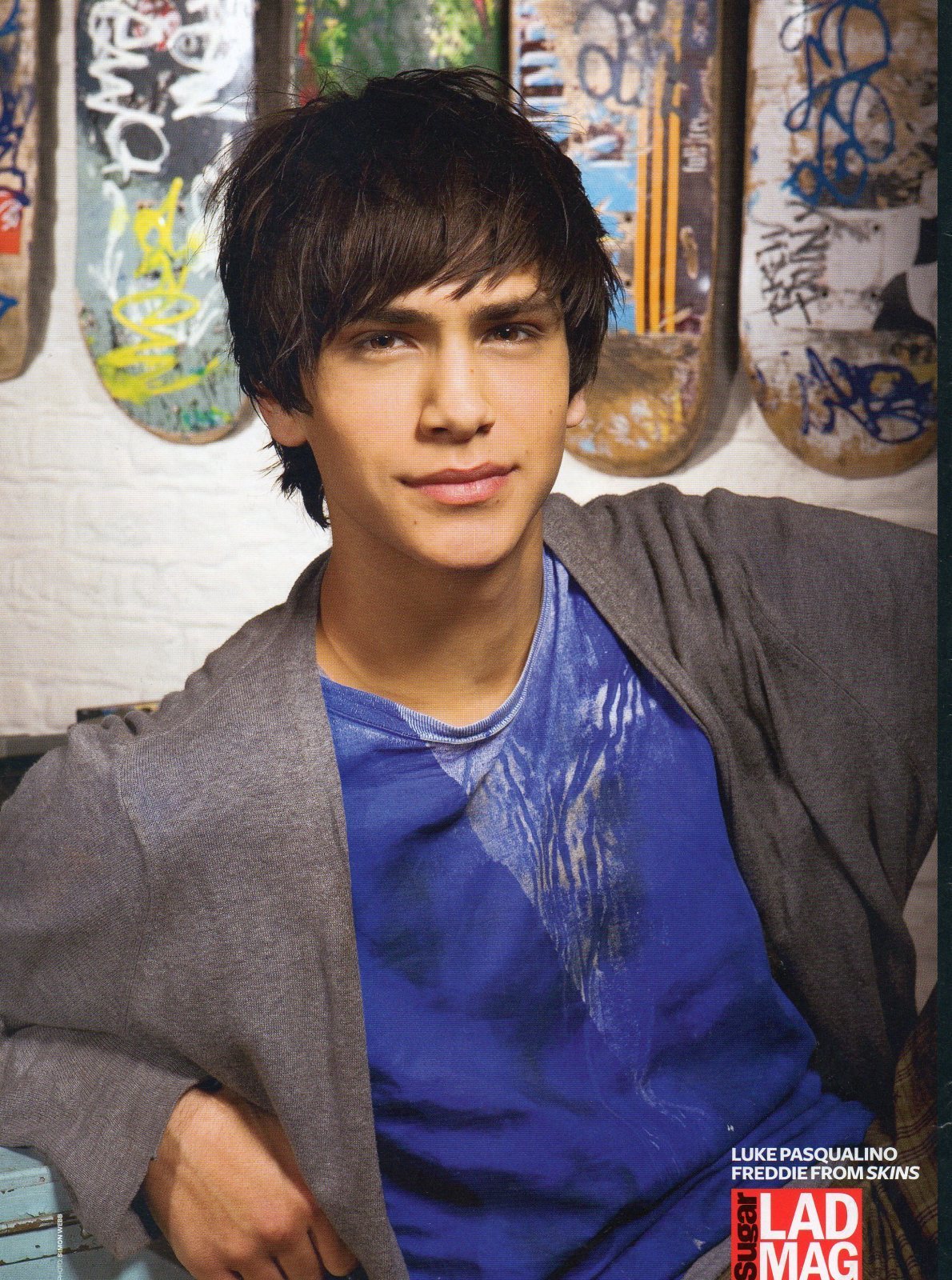
Boosted by season nine reruns of 7th Heaven, David Gallagher defended his strong May showing, and built on last month’s momentum. It’s too early to tell, but there are indications that Logan Lerman could be in the heartthrob game for the long haul. A glance at the Gamer trailer, makes me hope that he will take a step back and choose a little smarter for the future, however. Movies like that might be necessary to claw your way to permanence in a very competitive business, but since I have higher hopes for him than his mere survival – a new Hirsch or DiCaprio, say – it’s a little frustrating. The friendly rivalry between Mitch Hewer and Nick Hoult this month is resolved in Hewer’s favor, but apart from that, the real story is the continued rise of their Skins successor Luke Pasqualino. I’m still not convinced of the charms of the third season, but if anything lasting is to come of it, it has to be this guy. He’s sort of like a more obviously heart-stopping version of Chris Lowell, in a way.

#11-20: Speaking of comparing people, doesn’t Lucas Till look a little like Ed Speleers? Yeah, he does, you say, and thus we are all in agreement. Anyway, what follows is meant as a compliment, even though it may not sound like much of one: Till was made to play the regular rural Southern guy in Hannah Montana: The Movie. For all it’s flaws – food fights with pastry, Southern stereotypes, Billy Ray Cyrus – HM is actually decently entertaining, and Till’s calm smile probably was the one thing that made me relax enough to give it a chance. Of course, I’m capable of feeling more than one thing at once, but in keeping with the family-friendliness of the movie in question, I’ll refrain from elaborating on what other things the Till made me feel. The movie may be quickly forgotten, but like Luke Pasqualino, this guy may be a keeper.

Elsewhere in the Disney machinery, results are more mixed. Raviv Ullman, still best known as Phil Diffy of Phil of the Future, has begun the quest to fight his way back into the Top Ten with this month’s slight climb. Matt Prokop, though, who made a great debut in April, faces a five spot decline. When I’m not very concerned yet, that has to do with the consistent pitching of Matt over at the Dreamboats blog, a great source of cuteness and plain, not-all-that clean fun, that should also be attributed with warming me to Lucas Till even before HM. Jay, bless him, also keeps an eye on Logan Lerman.

In a second tier dominated by minor incidents – Tyler Hoeclin and Ryan Sheckler are down slightly, Kevin Zegers regains what he lost in May and Alex Pettyfer is locked in at #19 – I cannot help but pointing to Zac Hanson yet again. If Jay could be credited with pitching Lucas Till, then credit certainly is due for Bryan on the subject of Zac. A follower of this Tulsa treat for more than ten years, I didn’t exactly need serious convincing, but Bryan’s persistent advocacy nonetheless made it easier for a preternaturally nostalgic soul like me to fully embrace even Zac’s non-musical qualities. Now I love them both. Finally, Gaspard Ulliel’s seemingly significant five-spot decline should not be read as a particular sign of weakness. For a guy who, unlike people like Hoechlin who has regular syndicated television exposure, or Zegers or Pettyfer who are all over the gossip blogs, has no natural source of exposure, it’s highly impressive to stay comfortably within the Top Twenty for months now. Same goes for Charlie Hunnam, who has not been a mainstream feature since Undeclared in the early 2000’s, apart from small movie appearances, and the fairly marginal TV series Sons of Anarchy.

#21-30: In the case of Chris Lowell, you would be forgiven for assuming that I’m overcompensating again. Chris Lowell was simply let out of the April edition, after all, and he returned last month, his #37 showing seemed to spell trouble. But when I saw an episode of (the missed and frequently excellent) Veronica Mars a couple of weeks I ago it was strictly coincidental, even though I immediately understood that it would seriously bolster his standing. For June, he climbs a massive twelve spots, to #25. Next month will be the real test of his strength. While I’m optimistic on his behalf, Jeremy Sumpter’s story may serve as a reminder that it can be incredibly hard to defend such huge gains. Or I could point to Adam Brody or Jesse Eisenberg, who, while they have climbed in smaller steps, are no strangers to the ups and downs of this list. Now, Brody is once again looking up, while Eisenberg slips six spots to #28, running counter to my expectations. I half-expected him to benefit from the physical association I made when watching Adam Samberg in I Love You, Man, but the competition is exceptionally hard at the moment. That seems to have hit Jamie Bell,, too. His slides to #29, his weakest showing to date. The aforementioned examples, however, suggest that we be careful in reading too much into it. That leaves Ryan Donowho as the beacon of relative stability in a rather volatile environment. Jay Brannan, who made a big splash with his #18 return, drops a significant but not entirely unexpected nine spots. If we compare with his previous run on this list, #28 is still high for him. Wiliam Moseley and Jonathan Taylor Thomas continue to silently work their way up.

#31-40: Here, Rafael Nadal has finally been able to break a cycle of decline, surging eight spots at the back  of an excellent profile in this week’s New York Times Magazine. Unfortunately, he has since withdrawn from next week’s Wimbledon, making it very hard to predict how he’ll fare in the coming months. Hopefully, he will at least be fit (heh) for U.S. Open in August. In other positive news, Joe Jonas’ surprise rise to #34 clearly deserves some attention. With Jonas Brothers releasing their new album, Lines, Vines and Trying Times, he has of course gotten lots of exposure, but I have to admit that it was these pictures that did it for me. I’ve never looked at him this way before. Generally, the bottom two tiers are the place for people on the decline, so kudos still go to Taylor Hanson and Ryan Phillippe for rising. Chris Pine makes his debut at #39 courtesy of Star Trek, and if the memory does not fade, I wouldn’ t rule out that he could be accompanied by Chris Hemsworth, his Trek co-star and formerly of Home and Away. Speaking of H&A, Mitch Firth no longer seems able to ride the coattails of the recent Chris Egan EGA, falling eight spots to #35. Cristiano Ronaldo confirmed his move to Real Madrid this month, but in the short term, his moving away from Manchester United doesn’t seem to have won him much in terms of upward drift on this list. With regard to Leonardo DiCaprio, I’m awaiting my copy of Revolutionary Road to see if he might be on the up.

#41-50: Over the last couple of months, two things have been discussed continually in this space: The questions of the true hotness of Aaron Carter and Chace Crawford. As far as the preliminary verdict goes, both have reason to worry. The shift from May is most dramatic for Carter, a ten spot slide suggesting he has reached a point of no return, while Crawford seems to have stabilized somewhat at #44, but such a reading risks underestimating both Carter’s ability to bounce back, and Crawford’s recent lacking displays thereof. His showing actually disguises an under-performance, as the publicity he garnered when he was named to replace Zac Efron in the Footloose remake should have given cause to a climb. Apart from Carter, then, Dev Patel is in the worst shape of the fifth tier. Franz pointedly asked me what I saw in the guy, and I felt I couldn’t really say. Upon re-examination, it felt right to move him down. Maybe rewatching Slumdog Millionaire (highly unlikely) can save him? June’s final newcomer is Corbin Bleu, at #44. This guy has been on the bubble ever since I caught HSM3, and after having had to endure Lucas Grabeel’s brief stint on the March edition, his time has now finally come. It should be interesting to see whether and how he benefits from his role on the upcoming CW drama The Beautiful Life. Mysterious Skin probably helped Brady Corbet stay on for another month, while Jeremy Sumpter seems practically doomed.

  1. Emile Hirsch (Previous ranking: 1)
  2. Hunter Parrish (3)
  3. Zac Efron (2)
  4. Jesse McCartney (4)
  5. David Gallagher (5)
  6. Logan Lerman (9)
  7. Mitch Hewer (8)
  8. Nicholas Hoult (6)
  9. Chris Egan (7)
  10. Luke Pasqualino (14)
  11. Zac Hanson (13)
  12. Tyler Hoechlin (10)
  13. Ryan Sheckler (11)
  14. Raviv Ullman (16)
  15. Lucas Till (new)
  16. Kevin Zegers (21)
  17. Gaspard Ulliel (12)
  18. Charlie Hunnam (17)
  19. Alex Pettyfer (19)
  20. Matt Prokop (15)
  21. Ryan Donowho (20)
  22. Jonathan Taylor Thomas (23)
  23. William Moseley (26)
  24. Adam Brody (29)
  25. Chris Lowell (37)
  26. Ed Speleers (25)
  27. Jay Brannan (18)
  28. Jesse Eisenberg (22)
  29. Jamie Bell (24)
  30. Sean Faris (30)
  31. Rafael Nadal (39)
  32. Shad Moss (28)
  33. Taylor Hanson (34)
  34. Joe Jonas (41)
  35. Mitch Firth (27)
  36. Cristiano Ronaldo (31)
  37. Leonardo DiCaprio (36)
  38. Ryan Phillippe (42)
  39. Chris Pine (new)
  40. Fernando Torres (38)
  41. Andrew Carroll (40)
  42. Aaron Carter (32)
  43. Dev Patel (33)
  44. Chace Crawford (43)
  45. Cody Linley (47)
  46. Corbin Bleu (new)
  47. Rhys Wakefield (RE)
  48. Brady Corbet (48)
  49. Michael Pitt (46)
  50. Jeremy Sumpter (35)
Posted in Entertainment, gay | Tagged | 18 Comments

The Sex-Negativism of ‘Antichrist’

Danish director/crazy genius Lars von Trier’s (Dogville) new movie Antichrist tells the story of an unnamed, married couple (Charlotte Gainsbourg and Willem Dafoe), whose young son is killed falling out of an open window while they are having sex in a nearby room. This tragedy sends the mother into a deep depression, powered by a strong sense of guilt and self-loathing over the circumstances of her son’s death. The severity of the depression then convinces her psychiatrist husband to take her to a cabin deep in the woods, in an effort to confront her inner demons, treat her depression and help them both move on. However, the therapy goes both ways, to unveil dark secrets in both of them and setting of a bare-knuckle psychological standoff that, we quickly understand, can have no winner.

Or something. The point is not whether this short synopsis does the movie justice (I’m pretty sure it does not), it is that it is written at all. After Antichrist premiered at the Cannes Film Festival in mid-May, predictably splitting audiences between those who considered it further proof that Lars von Trier is the most wickedly visionary guy in modern European film-making, and those, just as many, that saw in Antichrist a movie so blatantly sadistic, misogynist and over-the-top crazy that Trier should be forced to apologize for even giving it an audience, it was all in a haze. Lost in the heated allegations was not only what the film itself was about, which I have tried to summarize above, or what the whole thing meant, but also what exactly elicited so much froth among film critics. For the first couple of days it was practically impossible to understand what the shouting was about, since the reactions themselves became the story. Sadly, even though it eventually became clear they were reacting to some very disturbing scenes of self-mutilation and unorthodox ejaculation of bodily fluids, that didn’t make it easier to assess the movie’s reception, because the debate on the merits was so obviously uncomfortable and vague (so as not to spoil a central plot point). However much I hoped to avoid it, this piece will probably suffer from some of the same weaknesses.

These controversial scenes, and the fact that Trier wrote Antichrist while fighting his way out of a depression himself have led some critics to the somewhat cheap charge that it’s not much more than a lesson in self-therapy. I’ll say one thing about that; even if it were simply a therapeutic movie for Trier, it would have been worth watching. That’s why I’m not particularly troubled by the fact that I still, days after my screening, can’t say what I really think about it. Some of the critics who actually liked the movie have been outraged by the reaction the most absurdly brutal scenes in the movie have gotten from some audiences. Faced with such incredibly detailed depictions of pain and violence, some people naturally will react by considering the absurdity of the whole thing, and simply laugh it off. More than it’s a cowardly way to avoid thinking about what the scene they’re seeing actually mean, such a reaction should be respected both as a legitimate interpretation – Trier is never easily pinned down, and particularly not when he deals in the grotesque – and an understandable coping strategy.

To dismiss such a reception of a Trier movie would mean to rob him of something that has characterized all of his movies: His unrelenting drive to challenge and provoke his viewers, all the way from Breaking The Waves to The Idiots, from Dogville to Manderlay. Honoring that tradition, in an incredibly beautiful epilogue Trier neatly and provocatively cuts between of the couple making love and their son as he falls out of the window, so as to say to that terrible things will happen once people give in to their instincts. In a recent post about John Cameron Mitchell’s Shortbus, I labeled it sex-positive. If such a term exists, Antichrist is its definitive negation. It turns out the provocation of the epilogue is a central theme of the entire story, as sex, often understood as a stand-in for nature itself, is seen as inherently evil. Nature is Satan’s church, the mother says at one point. Sex seems to be held in equally low regard.

The philosophical nature of the thesis advanced in Antichrist makes it an interesting indictment of psycho therapy as well. Perhaps not surprisingly, it turns out that the husband, who insists to treat his wife himself, also has problems keeping his sanity. This is disturbing because we are educated to assume that the psychiatrist is the one in control of his feelings. That is the very reason he is entrusted with taking patients at all. But apart from playing with our perceptions of the psychiatrist as the solid rock in a sea of unpredictability and irrationality, Trier also twists the professional emotional detachment of Willem Dafoe’s character to such lengths, particularly at the beginning of their sessions, so as to make him an almost laughable figure. I ended up hating him for the way he staunchly kept his cool while his wife hurled the most outrageous accusations at him, because it reminded me of the kind of mind-numbingly self-disciplined moral relativism psychiatrists are supposed to cling to. No matter how much that may be his job and his best advice, it couldn’t help but feel a sort of suspicion from Trier’s story towards the psychiatrist’s tendency to conceptualize any feeling, hoping to make it seem like something relateable.

This leaves us with a problem I often have with movies whose most interesting feature is how they fail. Because they don’t succeed at what they’re trying to do, they have to be watched with some intellectual distance in order to be appreciated. It is my thesis that, conciously or not, this means that a certain amount of post-rationalization is necessary, because the movie as it unfolds does not grip me as a viewer on an intuitive level. I’m not saying that only simple, straightforward movies can be truly great, but I do think that movies like Antichrist, that are better at making you think than making you feel (in this particular instance it could of course have something to do with its cynicism) will start at a disadvantage.

Posted in Uncategorized | Tagged , | 2 Comments

The More Respectable Way To Watch Zac Efron’s ’17 Again’

This piece follows somewhat in the footsteps of my I Love You, Man review, in that my expectations going into Burr Steers’ rather bland romantic comedy 17 Again, to some extent influenced my final verdict. Like any non-professional consumer of the light, blockbustery fluff of the summer movie season would know, there are a host of reasons that could end up deciding what movies you decide to cough up for, and which will have to wait for later. It can be the movies themselves, the buzz surrounding them, what movies the people you’re going to the movies with want to see etc. All of these are perfectly respectable excuses for choosing one movie over another, and few people would argue with them.

For me however, in this case, (and others that I have written about before), the main reason was one of those that you’re not supposed to admit to. I want to see 17 Again for two reasons only: Zac Efron and Hunter Parrish. If you care what people think of you (which, in instances like these, you should not), this is kind of an impossible situation. Had I been younger, I would have been supposed to deny that I was interested in male eye candy at all, but now that I’ve actually reached an age where I’m not concerned about that, I’m supposed to stay away from 17 Again because I have grown out of its targeted demographic. That’s why I decided to give a damn about the whole thing and see it anyway.

I’m telling you this not because I think that’s a particularly brave or interesting thing to do, but because it offers some background to on what premises I watched the movie. I did not see it because I expected it to be good in any traditional sense, and my patience with Freaky Friday-esque romantic teen comedy is very limited. But now that I had taken the chance on it anyway, I needed a way to enjoy it, something a little more substantive than the pleasurable presence of Misters Efron and Parrish.

The messy but not particularly original plot of 17 Again probably is the wrong place to look. Here goes: 37 year old Mike (Matthew Perry), once a talented basketball player who decided to go with family life when his high school girlfriend got pregnant, starts wondering about how it would be like to live it all over again, when his marriage falls apart. Then for some reason he is transformed into a 17 year old version of himself (Efron), and the comedic potential is meant to lie in how the supposedly more mature and experienced Mike copes with the codes of today’s youth, and how he works to steer his children (who are now his schoolmates) safely through their everyday life, without disclosing who he really is. Throw in Mike’s extremely annoying manboy best friend covering as his dad, the school bully (played with abrasive sexiness by Hunter Parrish) dating Mike’s daughter, and several cougar hunting jokes, and it doesn’t exactly sound like much fun.

But it turns out to be quite enjoyable anyway. You just have to approach it the right way.  I tried to watch it in two ways at the same time. On the one hand, I watched it through a sort of High School Musical lens, but simultaneously I watched it as an admittedly sentimental, but still semi-sincere reflection on the special bond between parents and their kids. More than anything, these two angles were crutches I used to make sense of what would otherwise have been a dreadful movie, and the not-easily converged nature of these two readings answers neatly to a certain schizophrenia already apparent in the movie: Does it want to be a goofy teen comedy, or a reflection on paths not taken? The movie never comes down on one side or another, which is actually something of a strength.

The fact that young Mike plays basketball makes the link to Efron’s HSM legacy fairly obvious, and the first trailer (I wrote about it here) made an intertextual reference to it (‘He’s back in the game‘). In my review of HSM3, my point was that it would have been a far better movie if it had concentrated on the singing and dancing instead of littering the script with laughably self-important (‘I guess my heart doesn’t know this is high school’) lines about Troy and Gabriella’s Perhaps Great But Oh So Uncertain Future. Clumsy writing made the kids sound far older than they were supposed to be, which is often the result when writers don’t exactly know how to tell something kind of serious in a matter-of-fact way. Luckily, however, the contextual baggage that Zac Efron brings to 17 Again makes the best out of exactly what made HSM3 feel so clunky.

Sure, this is where my argument takes a turn for the cynical. But it is inherently hilarious (and a tad absurd) when young Mike, with the mind of old Mike, speaks gravely about what challenges the future holds for his children, in pretty much the same way that Troy and Gabriella did in HSM3. It’s particularly clear in a scene from sex-ed, and another in which young Mike has to comfort his own daughter (this is where the logic goes off the rails) after she’s dumped by her boyfriend. The point is: In HSM3 the self-importance was a flaw. In 17 Again, Mike actually has good reason to speak and act in this way, which makes 17 a quite fresh parody of Efron’s past, an interpretation mildly encouraged by all the perhaps-conscious references to what Mike and Troy have in common. I know it’s a lot to ask of the viewer (among other things, fairly deep knowledge of the plot of an unrelated film), but seen through this prism, 17 Again made me smile more than its set of atrociously over-written supporting characters ever could.

To balance out the cynicism though, there is also a kinder way to read, and possibly appreciate, this movie: Simply to take its semi-sincerity at face value. Viewed in that light, the aforementioned scenes of relationship advice and sex-ed become more somber reflections on the problems teenagers have with imagining a different future for themselves, and the natural grown-up instinct to imagine what could have been in retrospect. Since this also allows us to take some aspects of the story more seriously than others – you could appreciate the sort-of-sincerity and still detest the cheap excesses of the supporting roles – the whole cougar hunting/screwball comedy aspect of the story becomes a little easier to enjoy as well. Here I should add that this perspective was the one I was most influenced by going into the film, thanks to a fairly sympathetic review from an older Danish critic, Per Juul Carlsen, of Danish Public Radio.

That said, I can’t say I particularly liked 17 Again. The two competing perspectives are not immediately compatible, and trying to watch it in two different ways simultaneously creates an an inevitable distance to the proceedings. Also, much to my surprise, it’s Efron, not Perry who is supposed to carry the comedic weight of the movie on his shoulders. He does fine when the point is to simply stroll around and look dazzlingly self-conscious, but his comedic range is nothing to crow about. The dullness of Perry’s character also reminded of everything I don’t like about him; he simply is not the right guy to play someone whom life has dealt a lot of disappointments.

Finally, there is the feeling that, for all its attempts to balance the stupid with the sincere, 17 Again is first and foremost a marketing tool. Nowhere is this more transparent than in the opening scene, one of many that plays gently on Zac Efron’s HSM history. There is no reason whatsoever for him to be shirtless while throwing the ball around, but if you are to attract the teen crowd, you gotta give’em something to watch. To me, it’s a little embarrassing to admit that I displayed pretty much the same schizophrenic reaction that is built into the movie as a whole. On the one hand I knew that I shouldn’t be fooled by such easy tricks, but on the other hand, I certainly found the view very pleasurable, and I also knew that New Line Cinema had successfully calculated my reaction even by greenlighting this project in the first place. Damn you!

Posted in Uncategorized | Tagged , , | 14 Comments