Harvey Milk, I’m Here To Salute You

With the Oscars (which we all pretend to ignore, but ultimately don’t) just days away, Gus van Sant’s Milk has finally come to Norwegian movie theaters. For months I’ve been hearing great things about this movie, and over the last week or so, mentally I’ve been back in the early winter of 1998 (there’s that pesky delay again), reliving the extreme excitement I felt while waiting for James Cameron’s Titanic to finally open. The grandiosity of the Sinking Ship Saga answered to my every demand, and I’m happy to report that Milk did, too, though in a different way. It’s also nice to finally have someone to root for in Best Picture category at the Oscars. As we’ll get back to in a minute Milk probably won’t win, but it’d get my vote anytime.

If my few loyal readers could excuse me for constantly referring to Slate, the magazine’s television critic Troy Patterson recently said that although he liked the movie very much, it’s better politics than it’s art. I don’t share his feeling that those two things should always and forever be kept strictly apart, but he’s still on to something. Just like it’s impossible to watch Darren Aronofsky’s (slightly overrated) The Wrestler without taking Mickey Rourke’s own rollercoaster of a career into account, it would be impossible, maybe even irresponsible not to watch Milk through the prism of the terribly disappointing passage of Proposition 8 in California just this last November. Milk is not so much political in a narrow sense as it is humane, not so much polemical as it is probing.

Take the way it handles Dan White, the conservative supervisor who ended up killing both Milk and San Francisco’s mayor, Ed Moscone. Even though you’re not supposed to speak ill of the dead, and even though White was an obviously troubled man, I really liked how van Sant’s signature camera style and Dustin Lance Black’s terrific script succeded in making a whole, and – just as importantly – a complex person of him. In a couple of short but essential scenes (one in the hallways of City Hall and the other at Harvey’s birthday celebration), a vulnerable White hints  at financial problems to argue that the pay for supervisors should be raised. Later, these troubles were cited as one of the main reasons for why White was so mentally exhausted that he killed both Milk and Moscone. This, combined with Josh Brolin’s quietly dignified performance, never feels as an apology for his actions, but rather as an earnest and brave attempt to make him a whole man, instead of simply a character. Brolin has a face that in itself signals intense self-control, which here serves to make White surprisingly unpredictable and interesting, considering most of us knew going in that he’s going to end up a murderer.

In some of his broadest crowd pleasers (like Good Will Hunting, which I personally still think is great) van Sant has been accused of sentimentalizing his material for popular acclaim. While there are some scenes that could have that effect on a cynic, I happen to think that one of them, a scene in which Milk is handed an anti-gay leaflet by a young boy to the tones of opera music, is also one of the most moving moments in the entire movie. Here I could of course try to say something about how seamlessly the images and the music are integrated, but what I really want to point out is how this scene could stand as a symbol of how distinctively cinematic van Sant’s directorial voice is. Your average biopic often ends up as something of a dramatized documentary, but van Sant transcends these conventions beautifully in the little moments that matter. At any time, he effortlessly uses a variety of different visual and narrative approaches (several scenes are shot so as to resemble old television clips, and original television footage is included, too), in a way that makes Milk speak not only to the heart, but to the eyes as well.

To me, it seems like a very wise move to focus the movie almost entirely on Harvey’s political career, because his firm conviction that he was part of a movement leaves an opening to sketch out the specific cultural circumstances of his service to the people. I  love the intricacies of American politics, and the movie’s focus on the craftsmanship of San Francisco politics should itself be enough to counter any claim that Milk is a one-sided hagiography. Sean Penn, in an absolutely electrifying performance in which he finally and definitely comes down on the right side of intense (for examples of the opposite, see I am Sam, Mystic River), portrays Harvey as an idealist, but also as a person who is so dedicated to his cause that he doesn’t always know when to take a step back. While he was never part of the Machine, he certainly was a politician.

But having said all that, I have to go back and modify things a little. While I’m happy there are crucial nuances to the portrayal of Milk, I again have to admit that it wa’s one of those scenes that some people might find overly hagiographic (or in other instances sentimental, see above) that touched me the most. I’m thinking of a scene in which Harvey receives a call from a suicidal youngster in Minnesota, who has seen him in the news. In an effort to try to lift him out of his obvious misery (which would later be summed up in the catchphrase ‘You gotta give ’em hope!’), Harvey encourages him to leave Minnesota and try to make himself a new life elsewhere. To this, the young guy says he can’t, and the camera zooms out from the guy with the phone in his hand, to reveal the contours of a wheelchair. It really is an emotionally powerful moment.  If you could excuse me for getting a little personal here, I have to admit that it carried extra emotional weight for me as a physically disabled gay guy. I’ve never felt suicidal nor did I have a particularly painful coming out process, but I still think this scene says something profound about the personal insecurities of being different in a number of different ways.

These were the kind of thoughts Harvey Milk wanted us to get rid of, but he insisted that each and every gay individual had a responsibility to root out the causes of bigotry and prejudice. His campaign against Proposition 6 was grounded on the simple belief that the consequences of the proposition had to be personified, because it would be harder for straight people to vote against the interests of someone they knew. In the movie, this principle is captured in a quite painful scene in which a determined Harvey forces one of his closest advisers to come out to his parents to set an example for others.

It’s hard to know from around the globe, but from what I’ve seen in the American press, it seems like the campaign against Proposition 8 in California last year was based on quite different principles. I’m sure there were large grassroots organizations, but after the proposition passed, the campaign has been critcized for taking a too top-down approach to the matter. If nothing else, Milk taken together with the historic election of President Obama, should inspire people to reject the false notion that politics doesn’t matter. It does.

Still, I felt privileged when I realized my initial reaction to the anti-gay tirades of Prop 6’s Anita Bryant and John Briggs were a combination of laughter and disbelief. But pretty soon, that sense of privilege was turned to shame.  Yes, I live in a country with no Christian Right to speak of, and with a Conservative Party (!) whose considering naming an openly gay man their candidate for prime minister, but that doesn’t mean neither a) that I should treat the victories of yesterday as permanently won (there are still two parties in the Norwegian parliament who oppose marriage equality and other gay rights issues) nor b) that I’m in a position, or have any intention of, looking down at the fight that’s being fought by gay rights groups in America every single day. As Harvey Milk might have said it, it’s about You and You and You together making an Us. What’s so great about Milk, is that it’s at it most inspiring when it’s at it most political. Count me in.

Harvey’s relentless hope-mongering thus ensures that the movie is not all doom and gloom. Again, the argument’s not mine, but there definitely is something quite refreshing about Sean Penn playing a sympathetic (but no less complex) person for once, and despite the political hardships they face, it’s also rather refreshing to see the portrayal of gay men who are in no way neither insecure about nor ashamed of who or how they are. I believe it was Slate’s Julia Turner who in a fairly recent edition of absolutely unmissable talkshow The Culture Gabfest wondered whether the generally homo-positive tone of Milk could cost it at the Oscars, because the mostly straight Academy tend to be more appreciative of movies whose gay protagonists are very visibly uncomfortable about their gayness. But then again, a modern classic like Brokeback Mountain was snubbed by Crash, so what gives? Still, Penn’s turn as Milk doesn’t for a second feel like a try-out for the Oscar acceptance speech, in contrast to Tom Hanks in Philadelphia (which I didn’t even like back when I was a young and easily manipulated thirteen year-old), or Penn himself in I am Sam, for that matter. In fact, I have to point how incredibly comfortable everybody involved seem to be with playing gay. Much like Penn, it’s also nice to see the brighter side of Emile Hirsch again. His youthful idealism is the best way to view the movement Harvey Milk built, because Hirsch’s restless charm come to symbolize how urgency and wisdom both have to be present if change is to happen. Plus, I don’t care if his hair is a disaster area: I’m totally, unequivocally, heart-stoppingly in love with the guy.

Finally, I just have to urge you to see Rob Epstein’s excellent documentary The Times of Harvey Milk. However ambitious, it’s a suitable title for such a rich and deeply moving film. It will bring you valuable insight into the people close to Milk, and thus bring you straight to the epicenter of ’70’s gay politics. Epstein shows a deep understanding both of the subject matter and of the possibilities and limitations of the documentary as a genre, and of it he creates a film that is as exciting as any thriller, and as authentic as anything you’ve ever seen. See it. Just say Harvey sent you.

Posted in film, gay, movies, music | Tagged , , , | 15 Comments

Pretty And Pale Vs. The Sexiness of Smarts

It probably only serves to prove that I’m not that young anymore, that I only first heard of the Twilight juggernaut through the Arts section of The New York Times. Since I consider myself more than a little interested in pop culture, I was thus a little surprised (possibly even slightly ashamed) that I had not registered the vampire craze until the Times told me that among youngsters this supposedly is the biggest happening since the Harry Potter phenomenon. The article also told me that Twilight’s leads, Robert Pattinson and Kristen Stewart were now on the verge of becoming global household names, and that pretty soon the world of teen hysteria would revolve around them.

Since I don’t possess much power as an opinion maker myself, I’ve always been left with following trends and not creating them. Not wanting to be left entirely out of the current pop culture conversation, and (I have to admit) mildly intrigued by the somewhat broody good-looks of Pattinson, I then followed the masses into the dark. What I saw there was stupid and poorly acted, yet at the same time visually gorgeous and surprisingly entertaining.

I decided to write this piece before I had even seen the movie, because it wasn’t necessarily supposed to revolve around Twilight. Rather, I thought I was simply going ask what all the Robert Pattinson fuss was about, arguing that he is not that hot, and then sing an ode to Harry Potter star Daniel Radcliffe, who in a recent interview with The Daily Beast proved that intellectual heft can be just as sexy. We’ll still be getting to all that in a moment, but after I actually saw Twilight the direction of this piece changed slightly, simply because I have to admit that Pattinson actually is quite attractive. His character Edward, a vampire,  serves him well, as his mysterious and slightly introverted personality don’t constantly force Pattinson to expose his obvious weaknesses as an actor, and therefore much comes down to whether or not we believe that Edward is someone Bella (Stewart) could fall for. For the long stretches in which his principal task is to stroll around telling vampire jokes or just looking great that’s no problem. The problem only starts when he (and Stewart) are supposed to carry the story themselves. It’s perhaps only fitting that a vampire seems a little bloodless, but Pattinson’s wooden performance under emotional pressure combined with an at times painstakingly pompous script (‘You’re like my own personal brand of heroin‘, ‘ And so the lion fell love with the lamb’ etc), threatens to sink the movie.

Establishing it’s universe is always a challenge for movies like this, as it tends to draw the pace down. Hence, the first forty-five minutes of Twilight is dedicated to laying out hints about what makes the Cullen family so different, and also laying the groundwork for a severely under-developed story about an age old conflict involving Native Americans. Luckily, the movie picks up steam from then on, leaving the love story for a more action-packed and exciting round of blood-chasing, complete with an implicit discussion of the power of love and what it really means to be a vampire. Here, director Katherine Hardwicke finally understands that the material is at its best when its not over-explained; beautifully visualized, the cat and mouse game between the Cullen family and the rivaling vampire clan shows that Twilight is best understood and best served as a basic teen action spectacle, and not a melodramatic coming-of-age story about people with sharp teeth.

This also allows me as a viewer to devour some of the other simple pleasures of Twilight, like Jackson Rathbone, Justin Chon and Taylor Lautner without having to pay to much attention to how badly drawn their characters are. I was drawn to them anyway.

But if one young actor famous for playing roles about people with extraordinary powers ever were to actually conquer the world, I’d hope it’s Daniel Radcliffe, not Robert Pattinson. The British Harry Potter star, whose praise I’ve sung previously in this space, obviously knows more than simply how to look good. In a January interview with former New Yorker and Vanity Fair editor Tina Brown’s increasingly indispensable Daily Beast website, the young Brit showed that what’s between his ears can be just as interesting as what’s underneath his clothes. His discussion of who’s the sexier of him and Pattinson was what gave me the main idea for this piece, and I’m also glad to see that he has a relaxed yet comfortable relationship with his gay fan base. What really made me love him however, was the political  views he expressed. It probably would have been enough for him to show that he had at least thought a little about contemporary British politics, but his scathing characterizations of Boris Johnson (long story short, he’s the schoolyard bully turned Conservative Mayor of London) and New Labour (suffice to say, it’s not really Labour), had me smiling from ear to ear. Let’s recap: He’s an experienced, gay-friedly wizard, socalizing with Robert Pattinson while critizing New Labour for being insufficently leftist!

Potter for Prime Minister, anyone?

Posted in movies | Tagged , | 7 Comments

The Next Best Films of 2008, And Two Cases of Belated Recognition

Fellow cinephile Franz encouraged me to post an appendix of Honorable Mentions to my list of The Best Films of 2008 (take the time to read Franz’s list, too). Those ten film were of course singled out for a reason, but that that doesn’t mean that they were my only notable movie experiences last year.

As I believe I wrote when I posted the original list earlier this month, lists like this are always works in progress. It’s perfectly acceptable to change your mind as you see new movies or as you rewatch those you’ve already seen, but this list seems to have been a particularly sloppy work. When I sat down to compile the list, I told myself  to include the superb Lebanese drama Captain Abu Raed, whose heart-felt humanism, sincerity and wisdom deeply moved me at the Bergen International Film Festival screening just this past October, but for some reason, I forgot to give it the honor.

In a belated effort to do justice to the simple yet multi-faceted story of the janitor who is mistaken for a captain by the local youngsters when he picks up a worn-out pilots cap from the airport were he works, and whose inspiring (yet fictional) stories of how he has traveled the world not only brings optimism but also painful revelations into their lives,  I recommend it warmly. Having been a staple of worldwide film festivals over the last couple of years, I not sure if it’s possible to find (yet?), but if you do, don’t pass on it. Please.

Also in the aftermath of my original post, at one point I labeled Paul Thomas Anderson’s There Will Be Blood my biggest disappointment of 2008. Let me take a minute to withdraw  what I first said about it. Just a couple of days after I wrote about my skepticism, I decided to rewatch it, and my entire perception of the movie changed. Yes, it’s still somewhat slow, but it has that almost majestic feel to it that make its pacing seem just about perfect. In several of my previous articles (most notably about The Mudge Boy and Margot at the Wedding) I’ve made a point of criticizing how the somewhat shrouded psychological motivations of its main characters made them harder to accept, and the first time I saw it, that was part of the problem I had with Paul Dano’s (whose performance is otherwise excellent) character in Blood. Viewed a second time however, and watched through a prism of charismatic religiousity and and his complex relationship with Daniel Day-Lewis’ Daniel Plainview, it takes on a greater significance. And finally, if I ever said that Day Lewis’ performance was overrated (which I sort of did), I’ll take that back as well. The final scene is an instant classic, not only for its exhausting emotional climax but also for its almost frighteningly crisp cinematography. In summary, Blood pretty much is a tour de force of slowly building suspense, particularly in the final half-hour. I was lost, but now I’m found.

With those two out of the way, let’s get down to the actual honorable mentions, in no particular order:

3:10 to Yuma

It’s people like me who really need a movie like this, simply because we need a decent introduction to the western genre, without all the limitations of John Wayne (or Clint Eastwood) era westerns. James Mangold’s remake has a playfulness that’s inviting to skeptics like me. Russell Crowe (whom I normally don’t like that much) gives a particularly good performance. Also, the scene from the besieged building is vaguely reminiscent of Thomas Vinterberg’s western hommage Dear Wendy (2005).

She’s A Boy I Knew

Intimate but never intimidating documentary about a woman who’s still in love with her partner after having had a sex change operation (from Steve to Gwen). Family footage and personal interviews reveal something deeply profound not only about family, but also about the fluidity of sex/gender roles, and how little they should really matter. Anything but navel-gazing, this movie project give friends and immediate family a chance to talk about how their relationship with Gwen have changed over time.

Of Time and the City

More a movie essay than a traditional documentary, this is a gay man’s deeply moving and thoroughly original ode to Liverpool. In an almost poetic narrative style, it’s a sketchy portrait of how the city has evolved over the last several decades. Laced with self-deprecating humor, it’s also a personal take on class, gender and nature of history. Due for British DVD release in late March.

Forgetting Sarah Marshall

Since I’m definitely no Apatowian (director/producer Judd Apatow, whose long shadow casts all over Hollywood at the moment), I was a little surprised by how much I liked this one, but much is due to the clever script and attention-grabbing guest performances. Paul Rudd is better than I’ve ever seen him as the surfer dude, and both Jonah Hill and Jack MacBrayer are surprisingly sweet. Russell Brand’s character starts out as someone you’d love to hate, but in the end, you simply end up loving him. And like in other Apatowian vehicles (Superbad, Juno) there are moments of genuine sweetness. Here it has to do with a Dracula puppet musical.

Mamma Mia!

Like with Sarah Marshall, this probably is just as much a Guilty Pleasurable than an Honorable Mention, but that makes it no less pleasurable. The most important thing if you are to succeed with a musical like this, is that you have the guts to see if you have the songs to tell a story, not if you have the story to sing a song, which is basically the reason why Mamma Mia! worked, and Across The Universe did not. The result was that Mamma Mia! felt a real musical, however goofy and imperfect. The cheerfulness of even the saddest ABBA songs (The Winner Takes It All) make them flow seamlessly into the fabric of the movie, and everyone involved seemed to having a jolly good time. I had, too.

Posted in movies | Tagged | 1 Comment

The Gay I Am

I’ve written about how I feel about being gay from a variety of different angles before, from the more traditional coming-out story to the the hints of the Early Gay Crushes series, or how I’m somewhat uncomfortable with comforming to gay stereotypes, even though I use them myself to navigate. But there is one thing that’s more important than any of these when it comes to what kind of gay I am, and that has to do with how I talk to other people about my gayness.

Like pretty much every person in the world, and especially anyone who writes a blog, I love to talk about myself, and thus I would like for people to talk to me about this stuff (at least some part of me continually hope that I have more closeted gay friends than I know, heh). But still, every time anyone make a reference to my being gay, I find it slightly uncomfortable, because I’m no longer necessarily in charge of where this very personal conversation is going. On the one hand I guess I’m still not past the point where I want the whole world to know, but on the other hand I don’t want that information to make them see me in a different way.

These reflections came to me when I incidentally caught a rerun (season three, episode nine) of Weeds the other day. During season three it is revealed (minor spoiler ahead) that Sanjay (played by Maulik Pancholy), one of Nancy’s dealers, is gay. A scene in which the Botwin family and associates discuss their dealing policies, perfectly captures my own attitude toward other people about my gayness. Nancy has just given Sanjay his instructions when he adds:

And gay bars and dance clubs, ’cause I’m a fag***. I can call myself that, but you can’t, ’cause I’m gay and you’re not. I’m not ashamed. This is who I am.

The ‘I’m not ashamed. This is who I am‘ part is probably added as some sort of joke about the correctness of it all, but to me it carried some significance still. Having been out to everyone for more than two years now, I still have to tell myself that if I don’t want this to be a big deal for my friends, then it shouldn’t be a big deal for me either. In the next moment, Sanjay’s sudden need to re-introduce himself comes to life again, as he blurts out that he’s gay to Nancy’s son Silas (played by the incredibly attractive Hunter Parrish, who currently rests at #3 on the Sexiest Males Alive list). I imagine I would have done pretty much the same thing, just not nearly as confidently.

People who think they might be gay are often told that it’s just a phase. I’m well past that. The phase that’s not talked nearly as much about, but it implies that you actually are gay, and that you neither can nor want to change that, is what happens after you realize you’re gay. I’m talking after the coming out process, about learning to live a gay life without the need to defend yourself against what you think others might think of you, or perhaps just as important, what you think of yourself. Let’s call it the Life is gay. So am I phase. Weeds doesn’t give out the answers, but in a way it made me understand myself better.

Posted in gay | Tagged , , | 6 Comments

With New Year, Jesse McCartney Is Back As Sexiest Male

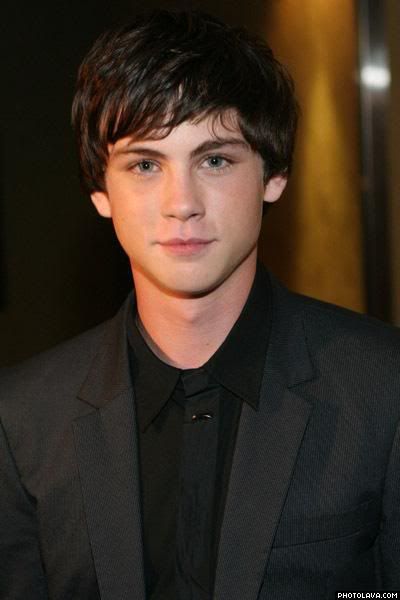
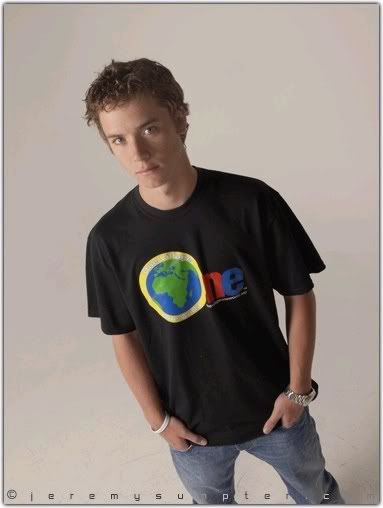
After a several months long absence the SMA list is back , and as has become rather common by now, we have a new man at the top. Not that he hasn’t been up there before: Jesse McCartney finally gets revenge on Hunter Parrish for the latter’s July upset, pushing Parrish to third, just below Emile Hirsch. Other notable positives include old faitful Leonardo DiCaprio’s eleven spots climb to become Climber Of The Month and a fixture in the Top Twenty, followed by Taylor Hanson and Ed Westwick, who both gained ten spots (#34 and #35, respectively). At the opposite end, it has been a disastrous few months for Jeremy Sumpter, who has seen his seemingly safe and promising #25 spot replaced by a full twenty spot slide, to #45. Both Logan Lerman’s and Max Theriot’s declines (thirteen and eleven spots, respectively) would have been considered lackluster any other month, but compared to Sumpter’s collapse they come off as relatively modest. We bid farewell to Michael Angarano, Josh Peck, Kostja Ullmann and Jody Latham, while we welcome newcomers Cody Lindley (#36), Charles Carver (#42) and Michael Pitt (#47) as newcomers, and give Skins star Joe Dempsie (#45) a heart-felt welcome back.

As always, the changes on this list is generally caused by any particular guy being considered by me to be relatively more attractive than he was considered previously. That, however, of course doesn’t necessarily mean that any of the other people on this list have become markedly less attractive, only that they perhaps have not been as good at getting my attention lately. With that said, let’s break it down:

#1-10: Jesse McCartney’s reclaiming pole position has been in the making for months now, due to another set of Summerland reruns, and now it finally panned out. The top six here is so incredibly close that it’s bound to change almost on a monthly basis, and this month that was to October frontrunner Zac Efron’s disadvantage. Mitch Hewer experienced a nice boost from my finally catching the second season of Skins, and Alex Pettyfer has gotten out of his downward slide, to take #9. We welcome former soap star, current b-movie actor Chris Egan to the top tier. Look for him in a future installment of the Early Gay Crushes series.

#11-20: It’s still fairly steady in the upper half, although we could note in the positive that both Charlie Hunnam and Cristiano Ronaldo seem to have stabilized, after a less promising few months. Jesse Eisenberg rockets up eight spots, as always courtesy of my endless rewatching of The Squid and the Whale. As was the case with Lerman and Theriot in a less positive sense, Eisenberg is still overshadowed by Leonardo DiCaprio’s even more rapid rise. The reason of course is Revolutionary Road, or rather a mix of promo pictures and my own impossibly high expectations. It could of course be one-month spike, but given what I’ve written before about the status that Leo holds on this list, it’s still remarkable. Elsewhere, Kevin Zegers (#17) makes his best showing yet, while Ryan Donowho (#18) duplicates his personal best. Gaspard Ulliel deserves an honorable mention for defend his strong #11 debut, even outperforming former Top Ten Ryan Sheckler.

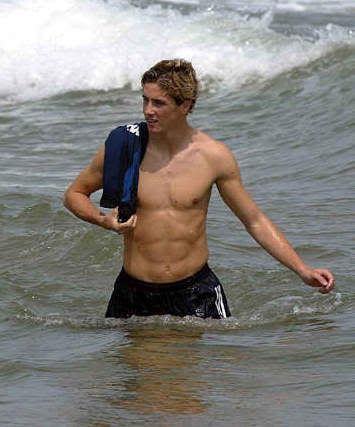
#21-30: Like the rise of Ed Speleers and Adam Brody (which seems to have reached its peak, at least for now), it looks like Zac Hanson and Jonathan Taylor Thomas feed off each other’s momentum. Formerly a Top Forty contender, the youngest Hanson could now very be a candidate for the second tier, and Thomas’ steady upward climb make nothing seem impossible for him either. This is a trend that has been visible ever since they made up the first two installments in the EGC back in August/September. Coming back from a several months long injury, Liverpool striker Fernando Torres again is a force to be reckoned with, taking seven spots in reintroducing himself to the Top Thirty. Jamie Bell on the other hand, is on a slide for no apparent reason. In fact, dropping to 25th when I rewatched Hallam Foe just recently, must be labeled as underperforming. Also, Aaron Carter is no longing surging, eking out a #30 showing.

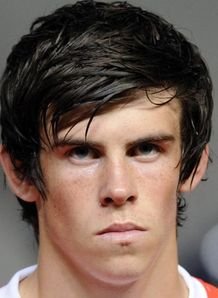
#31-40: Having already mentioned Taylor Hanson (possibly benefiting from his close association with brother Zac) and Ed Westwick (who showed off his adorableness in the equally adorable Son of Rambow), let’s instead give a round of applause to Cody Lindley, the Hannah Montana co-star. There’s always room for another Jesse McCartney-style prettyboy, though his show is pretty much impossible to watch. We’ll just have to hope he fares better than Josh Peck, who fell right off the list this month, after his October debut. Fellow October newcomer Joe Jonas is still looking up however, climbing three spots to #39. Ryan Phillipe’s trend is still positive too, while Chace Crawford’s and Jonathan Rhys Meyers’ respective declines only confirm that it actually is possible to be too pretty for your own good. I’m just not in the mood for them right now, but I’ll bet they’ll bounce back. Raphael Nadal, Randy Harrison and Gareth Bale represent continuity, but again I’m a little surprised that Nadal’s increased Australian Open exposure has not resulted in him climbing.

#41-50: Generally, the Forties is a place for either respectable first-showings or complete collapses. This month is no exception. By luck and hunky-ness Desperate Housewives (a show I’ve never watched) star Charles Carver makes it #42, while Michael Pitt was able to ride his Young Leonardo status all the way onto the Sexiest Males Alive list. Unfortunately for his future prospect, he has a certain tendency to make himself look not good for many of his roles, but as long as my memory of The Dreamers is alive and well, he has a decent shot at sticking around. The collapse category is represented by the aforementioned Theriot and Sumpter, but Thomas Dekker’s eight spot slide is not exactly encouraging either. In a month where German stalwart Kostja Ullmann (of the coming-of-age story Summer Storm) finally had to give in, it’s at least heartening to see that Brady Corbett is still with us. So is Joe Dempsie of course, though perhaps ironically, his recurrence was propelled by my watching his character’s last days on Skins.

  1. Jesse McCartney (3)
  2. Emile Hirsch (4)
  3. Hunter Parrish (2)
  4. Zac Efron (1)
  5. Mitch Hewer (9)
  6. Nicholas Hoult (5)
  7. Ricky Ullman (6)
  8. David Gallagher (7)
  9. Alex Pettyfer (16)
  10. Chris Egan (12)
  11. Gaspard Ulliel (11)
  12. Ryan Sheckler (8)
  13. Charlie Hunnam (13)
  14. Cristiano Ronaldo (14)
  15. Tyler Hoechlin (15)
  16. Jesse Eisenberg (24)
  17. Kevin Zegers (19)
  18. Ryan Donowho (22)
  19. Leonardo DiCaprio (30)
  20. Ed Speleers (17)
  21. Sean Faris (18)
  22. Adam Brody (21)
  23. Logan Lerman (10)
  24. Zac Hanson (29)
  25. Jamie Bell (20)
  26. Chris Lowell (27)
  27. Mitch Firth (23)
  28. Jonathan Taylor Thomas (37)
  29. Fernando Torres (36)
  30. Aaron Carter (28)
  31. Raphael Nadal (31)
  32. Chace Crawford (26)
  33. Randy Harrison (34)
  34. Taylor Hanson (44)
  35. Ed Westwick (45)
  36. Cody Linley (new)
  37. Ryan Phillippe (41)
  38. Gareth Bale (38)
  39. Joe Jonas (42)
  40. Jonathan Rhys Meyers (32)
  41. Chad Michael Murray (40)
  42. Charles Carver (new)
  43. Thomas Dekker (35)
  44. Max Theriot (33)
  45. Jeremy Sumpter (25)
  46. Brady Corbett (46)
  47. Michael Pitt (new)
  48. Rhys Wakefield (50)
  49. Joe Dempsie (RE)
  50. Daniel Agger (49)
Posted in gay, sexy males | Tagged , , , , , | 4 Comments

Early Gay Crushes: Joshua Jackson

When I see what movies are offered to moviegoing kids these days (seriosly, Beverly Hills Chihuahua?!), I’m sometimes surprised by what you can get away with in today’s Hollywood, and how the kids themselves seem to be perfectly fine with it. Just as this thought cross my mind, I’m likely to let the little people off the hook, because what the slightly older crowd seem to consume and relish is not much better, often even worse. And then finally my argument of cultural pessimism and moral decay falls apart completely, as I realize I was just as easily fooled myself.

Before I had seen enough movies to know otherwise, I generally judged them by simple standards; they were either good or bad, entertaining or boring, and I strove for the recognizable more than the fresh. All of this was of course only natural and just fine, but when I look back at what made me love a particular movie back when I was 9, 10 or 11 years old, I also often remember that I had what could probably be best described as a crush on one or more of the actors. As I’ve written previously I didn’t necessarily connect the dots at the time, in part because I didn’t know it was supposed to be a big deal to fall in love with another boy, and in part because I didn’t know that much about what it meant to have a crush on someone anyway. While I guess it was not the main factor that made me love a movie or not,
I think I wouldn’t be over-analyzing things if I said it might haveplayed a role, however small. Also, that could prove a handy explanation if I were to justify why I once loved such largely unbearable movies as Jack (Adam Zolotin), Free Willy (Jason James Richter) or Little Giants (Devon Sawa)

Of all my early favorites though, I’m a little embarrassed to admit I was most passionate about Disney’s Mighty Ducks franchise. Apart from making me an avid fan of North American ice hockey (I don’t follow it nearly as closely as I did in the mid-to-late ninenties, but I still check up on my favorite team – Boston Bruins, don’t ask me why – once in a while), and providing me with a safe, simple and sentimental tale about the need to never give up, the movies (all three (!) of them) also had my heart racing for its young lead, the then-unknown Joshua Jackson. Back then it didn’t matter that all these movies were thick with moral lessons or that the jokes were beyond both stupid and predictable; I wanted to have what he had, and I was secretly stunned by his looks (Jackson third to the right).

Like another Early Gay Crush, Zac Hanson, Jackson has never been and will never be hot in any strict sense of the word, but my fascination with him was nonetheless renewed when he scored the role of Pacey Witter on the inevitably sappy yet strangely addictive Dawson’s Creek. It’s of course possible that his natural charm and charisma came through even clearer because his male co-star James van der Beek desperately lacked both, but this and the fact that his was character much easier to like than he incessantly whiney Dawson Leery, made him a reason for me to watch the show. When I wrote about the cuteness of Michael Cera and Jesse Eisenberg last year, I fondly labeled them geeks (for lack of a better term), to accommodate for guys who may not be universally regarded as physically attractive, but whose charisma draw you to them anyway. I’m not sure if he fits the bill entirely, but he comes close.

Today though, my Joshua Jackson crush is mostly a nostalgic memory. I’ve noticed that he stars in FOX’s modestly successful Fringe (that’s about as successful as they come in the television business nowadays), but since I’m no fan of neither sci-fi nor facial hair, I think I’ll say our relationship has run its course. But because kids are driven by recognition and teens are driven by hormones, it’s safe to say we had some fun along the way.

Posted in gay, movies | Tagged , , , | 8 Comments

Baz Luhrman’s ‘Check All That Apply’ Approach To ‘Australia’

Slate’s excellent movie critic Dana Stevens said of Noah Baumbach’s Margot at the Wedding (which I wrote about last week) that it looked like a promising first draft of a movie, the only hitch being that this was also the final one. This seems true for Baz Luhrman’s Australia as well, with one crucial exception. However unfinished and messy this movie seems, my imagination isn’t not quite vivid enough to picture how later drafts of the movie could have been fairly described as good, or even coherent. Maybe if Luhrman had decided to cut the number of genre boxes he wanted to check? Maybe, but probably not.

In press interviews Luhrmann talks enthusiastically about the passion he had for this project, but I can’t help but feel that at crucial times in the process his passion somehow blurred his artistic vision. His wish to say something (preferably substantive) about Australian-English relations, the assimilation of Aborigines, and the eternal human quest for love and self-discovery threathens to break this movie’s back at every turn. The unfortunate result is that he ends up saying what only amounts to emotionally flat platitudes and/or caricatures. I have no reason to believe that Luhrmann’s intentions are anything if not good, but the execution most definitely isn’t. At times it feels like he tries to cram a total history of Australia into a (very, very long) movie, foregoing character development for the symbolic tide of history.

You could of course be excused if you stopped expecting anything substantive from this movie in the first half-hour. The broad attempts at deeply cliche-ridden comedy would have been bad enough, had it not been for the fact they they definitively kill whatever shot at emotional depht this movie ever had, when it takes a turn for the more serious after having also checked the box for panoramatic western on its way to well-meaning yet slightly condescending native melodrama. The normally steady Kidman overacts grotesquely in the first third of the movie, but she doesn’t get much help neither from Hugh Jackman’s Crocodile Dundee-like stereotype, nor from the script. Bad jokes would have been more easily forgiven though, if the setup of a cluless yet surprisingly (sic) good-natured British aristocrat hadn’t seemed so utterly predictable for a film of such great ambition as Australia. The biggest problem is that Kidman fails to make me believe in how her character supposedly matures throughout the movie. It feels like Kidman keeps a distance from her character, and so there is no natural bridge between how her character acts in the beginning and at the end. Jackman struggles with the same problem, not least when it comes to the romance storyline. Since I keep considering Kidman’s character pretty much a distanced fake, I cannot get my head around why he would fall in love with her.

Some might be heartened to know that Baz Luhrmann The Show-Off is nowhere to be found in Australia. Doing a historical drama, he has not been tempted to update it or laced it was implicit pop culture references, which is fine with me too. What’s lost in this picture however, is the visual virtuosity that has lit up his previous movies. You could of course say that that would have undercut the more somber tone of the movie, but to me he did so anyway with the first half. The result is that Australia not only is a bland experience (at best). Worse still, it even looks like one.

Instead of visual artistry, he decides to let nature do the work for him. As seen in Into The Wild, this can no doubt be an honorable ambition, but here it’s a failed strategy. It’s one thing that the cinematography, however gorgeous, serves to confirm our already defined image of Australian, with the risk that the viewer feels that he’s watching an informercial about the pleasures of going Down-Under, more than a vibrant work of art. More troubling though, is how Luhrmann combines these beautiful nature images with long, sweeping scenes of old and wise, or young and curious yet always silent Aborigines. To me, this implicit link between Man and Nature threatens to reduce the Aborigines to being Nature, which would make it harder for the average viewer to identify with them. I’m not going to accuse Luhrmann of taking an imperialist viewpoint, since I have reason to doubt his motives, but I nevertheless found it a little condescending, but to me as a viewer, and to Aborigines as a people.

A couple of weeks ago, the Los Angeles Times reported that Australia was hoping for a late surge in goodwill to garner it some Oscar nominations, after most critics were left cold. While the Academy has made its fair share of mistakes in recent years, I still believe they will do the right thing and leave Australia out. I’m more interested in whether they will let Milk in.

Posted in movies | Tagged , , , | 3 Comments

What I Loved Last Year: The Best Films Of 2008

From Norway, the year in cinema might look a little different than how it looks for American critics and moviegoers trying to summarize 2008. The Oscar contenders are still weeks or even months away from our movie theaters, which means Milk and Revolutionary Road are both out of the running. Likewise, last year’s Oscar contenders, like Into The Wild, Juno and The Diving Bell didn’t premiere in Norway until February 2008, and are thus eligible to my list. Same goes for Once, the excellent British music film that didn’t open in Norway until this last summer, even though it was made way back in 2006.

To qualify, the movies will have to have had a theatrical release, or at least a screening, or a first-run airing on national television between January 1 and December 31, 2008. When reading this list, one should also note that such list are always works in progress. There are still some quite notable movies I haven’t gotten around to see yet, like No Country For Old Men, and by mid-2009 it might look a little different, but I would still say this list says something about what I loved last year:

1. A Christmas Tale

This rich, nuanced French family portrait managed to squeeze itself onto the release schedule at the very end of the year, and what luck! Catherine Deneuve, Melvil Poupaud (Time To Leave) and Mathieu Amalric (The Diving Bell and the Butterfly) stand out in a very strong cast, capturing the tensions of a big family with even bigger egos. I wanted to watch it again right away.

2. Into The Wild

One of the great surprises of the year was that Sean Penn (and Emile Hirsch) actually made me love this incredible story about a young idealist who cut himself off from society and his family to live off nature in Alaska. While sympathetic, it doesn’t fail to ask big questions: Where do you draw a line between idealism and egotism? And could be that old people are right when they tell you wisdom comes with age? In intellectual and visual ambition, Into The Wild is inferior to no one, yet superior to many.

3. The Dark Knight

This is the final proof that it was wise to restart the Batman franchise. Christopher Nolan’s allegorical drama touches on torture and totalitarianism in the darkest and best superhero movie to date, also containing an absolutely mind-blowing performance by Heath Ledger.

4. Once

More a movie about the craft of songwriting than a musical, Once shows us how the power of music and lyrics than be even bigger – and more useful – than words. Glen Hansard and Marketa Irglova’s glowing chemistry manages to break through in this understated yet wonderfully uplifting love story. Also, it has a soundtrack dreams are made of.

5. The Class

This year’s winner at Cannes is an ode to curiosity. Not only on behalf of the students in the film, with all their questions about class, identity, ethnicity and language, but also the curiosity that’s essential to saying something meaningful about youth, hierarchy and communication. If it sounds like a liberal message movie, the fault is mine. It’s much, much more than that.

6. The Diving Bell and the Butterfly

I imagine this one must have been incredibly hard to adapt to the big screen, but Julian Schnabel succeeds anyway. The story of a man trapped inside his own body writing a book with his eyes, has a rhythmic beauty that is stunning, and the scenes in which his immediate family struggle to come to terms with the memory of the man they once knew literally had me crying. Mathieu Amalric made my life better last year.

7. Hallam Foe

My conviction that a half-failure is far more interesting than a film that triumphs in its conventionality has never been firmer than after I watched (and re-watched) Hallam Foe (Am title: Mister Foe). This film is a mess of suppressed anger, bitter silence and murky sexuality, but it’s a disturbing and energetic mess. Jamie Bell shines in an otherwise dark comedy.

8.Juno

Cute as can be, or too cute by half? No matter which side you come down on, there’s something about Juno. Jennifer Garner is surprisingly sweet, and even though it could be this is the only character Michael Cera will ever play, he’s so good at it that I can live with that. There’s something about the way he moves (and talks, etc.)

9. The Wackness

Even more than it’s a stoner movie, or a 1994 period piece, The Wackness is a smart coming-of-age-story about cross-generational friendship and young love. Whenever the mood threatens to get too gloomy, though, it’s sure to take a step back and light it up with a joke. I might love it for the exact same reasons you hate it, but that only serves to show that the fallible ones are also the most interesting.

10. Beautiful Losers

You gotta love this documentary for its visually energetic look at the American art scene in the 1990’s. Yes, it maybe a little self-centered, but at the same time it’s a charming portrait of an era, and like very few other documentaries, consistently laught-out-loud funny.

Posted in film, movies | Tagged | 6 Comments

Squid, Whale, Meet Margot At The Wedding

From a professional standpoint I’m more interested in directors than actors, and therefore it won’t necessarily take more than one good movie for me to strike a loyal relationship to a film-maker. Thus, when I first saw Gregg Araki‘s Mysterious Skin back in 2004, I immediately began hunting down his other films. However uneven, Nowhere (1997) was a truly fascinating mess, but by investing my trust in his abilities in this way, I also set myself up for an unpleasant landing should it be that he was unable to live up to my unreasonably high expectations. Still, absolutely nothing could have prepared me for the intense pain I experienced when I watched his stoner comedy Smiley Face last year. In the early 2000’s Dude, Where’s My Car forever ruined my relationship with this (sub-) genre, but still my trust in Araki’s artistic judgement made me overlook the obvious signs that I would hate the film; Anna Farris; stoner comedy; the terrible tagline (“High. How are you?“). I was terribly wrong, of course, and I hated it even more just because I’d expected more from an obviously talented guy like Gregg Araki.

My point then, is that I haven’t necessarily learned anything from this painful experience, and that I don’t even want to. Sure, I no longer believe Araki to be invincible, but I’ll still give him a chance to win me back. His voice as a film maker and an artist is so distinct and with such a huge potential that it would be way premature of me to write him off now. In a weird way, I’m now even more interested in where his career will go next than I would have been if Smiley Face had been even remotely more to my liking. My problem with Smiley Face mainly is that I think it failed in a fairly conventional way, and I don’t want Gregg Araki to make conventional movies. His job should’ve been to turn the whole genre on its head, if only to see what came out it. In the end, I know that this movie will find its place in his total production, and hopefully, he will be able to improve his game next time around. I didn’t abandon Richard Linklater after School Of Rock, and I’m glad I didn’t, because he then went on to do Before Sunset. Likewise, I could easily have decided I’d had it with Danish star director Thomas Vinterberg (whose international breakthrough, the dark comedy The Celebration, you should watch immediately) after his barely watchable first English-language film It’s All About Love (2003), but then I would have missed the visual fireworks of Dear Wendy, the slightly anti-American gun-fetishizing satire he directed from a script by fellow Dane Lars von Trier.

And this, my patient reader, is where I planned for this blog to start, until I decided to write a sort of backstory to my conflicted feelings toward Noah Baumbach’s Margot At The Wedding (2007). You see, Baumbach too is one of those directors who made such a profound first impression on me that I blindly trusted his talent to carry the day. Every time I revisit The Squid and the Whale (2005), I discover something new about this this painfully funny middle class satire and divorce movie, brilliantly played down to even the smallest supporting role by Jeff Daniels, Laura Linney, Jesse Eisenberg, Owen Kline, William Baldwin and Anna Paquin. Much like Ang Lee in The Ice Storm or Sam Mendes in American Beauty, Baumbauch is able to extract some big but guilty laughs by simply observing the pathetic self pity with which the bruised egos of Bernard (Daniels) and Joan (Linney) fight their turf wars over the hearts and minds of their two sons Walt (Eisenberg) and Frank (Kline). The bitterness is written into their every interaction even though they fight bravely to get along for their children, and we half expect (hope for?) Baumbach to back off at any time, simply because we’re neither used to nor comfortable with watching people humiliate themselves like this.

Among many others things (a stinging social satire on the cultural elite etc.), The Squid and the Whale is a movie about shame, self-assertion and the way kids are often manipulated into fighting battles on their parents’ behalf. In one particularly revealing yet painfully funny scene, the older son, Walt, explains to Frank that he should not tell his friends about their parents divorce because he’s afraid of how that might make them look, only to discover that Frank has already told it to a couple of his friends. On a base level, Walt’s reaction may seem simply protective, but at the same time it also serves to show how his way of thinking more than any other is formed by that of his father. Instead of openly admitting to each other how hard the the divorce is to them, they pick sides between their parents, with Frank defending Joan’s every move just as vigorously as Walt defends Bernard. Down to how they speak to other people, what they speak about and how they speak about it, Baumbach’s piercing dialogues mercilessly expose how family ties sometimes can make even the smallest mistakes seem inexcusable (here, I’m not talking about cheating on your husband).

Though the rivalry between sisters Margot and Pauline in Margot At The Wedding contains some moments of the same tensions, it’s doesn’t even come close to feeling as curious, probing, moving or funny as Squid. The cause of their strained relationship remains somewhat unclear, and since I suspect that the whole story is best viewed trough that lens, I’m having trouble understanding, and more importantly, caring about their sometimes erratic behavior. I guess I said something similar about The Mudge Boy a while back, but I only harp on about how these characters are underdeveloped because I really wanted them to work better. Overdeveloped characters often become airless and predictable, but underdevelopment can be just as bad, because we start viewing them in the light of those few things and traits about them, instead of considering them truly believable, engaging peopele.

As is often a problem when I’m unable to form an emotional relationship with the main characters, that frustration trickles down to even the supporting roles, and I start to see them through the same lens as I saw Margot and Pauline. Take Malcolm (Jack Black), the man Pauline is supposed to marry. He suffers from the fact that I don’t really care about his future wife, so why should I care about him? I also feel that Jack Black is miscast in this role. On paper, his charisma might have made him seem like a natural fit to play a chronically depressed and insecure man, but in my opinion he’s never able to transcend the somewhat annoying (and mainly comic) persona he has built in his previous movies. I can’t help but feel that Black would have played a parody of Malcolm pretty much the same way. It’s no compliment to Black, and a huge problem for the movie.

This doesn’t mean I will give up on Noah Baumbach. He still has the potential to be a famed chronicler of the anxieties of the American middle class. Still, it’s disheartening to see that he just took several steps away from that goal.

Posted in film, movies | Tagged , , | 3 Comments

Sex, Politics And Cinema Is The Holy Trinity In ‘The Dreamers’

Last week, I read an interesting opinion piece in a Norwegian weekly, arguing that this year’s 40th anniversary of the protests of 1968 should mark our final goodbye to this mythical milestone of political and cultural opposition. Even though the fight for gender equality and sexual liberation has come a long way (in Europe) since then, the political impact of ’68 is not immediately evident. The global world order is as unfair as it ever was, market fundamentalism has long since been the gold standard, our global environment is seriously threathened, and basic liberties are under attack from a seemingly never-ending and ever deepening War On Terrorism.

But, if it was so unsuccessful, why are we still obsessing about it? I believe it has something to do with longing for idealism, and an inherent sense of sadness stemming from all the hopes that were dashed by what came after. Not only did little change in Europe, in places were actual change occured, as in China, it was for the much, much worse. Until now, when Barack Obama has been elected on a promise of a new progressive politics, and the financial crisis seems to have dealt everybody a new hand (politically speaking). Just as much as they were about protesting the existing social order, the protests of 1968 were about what should replace it.

And so, this seemed like as good a time as any to revisit Bernardo Bertolucci’s The Dreamers (2003), a passionate and playful drama about the other side of Paris in those fateful months. Amid political turmoil, the American student and cinephile Matthew (Michael Pitt) bonds with French siblings Theo (Louis Garrel) and Isabelle (Eva Green) to create what he calls our own cultural revolution, in response to the government shutting the Cinemateque Francais, a temple for film buffs like them. And to me, regardless of the erotic drama that unfolds later, The Dreamers first and foremost is a film about the love of cinema. I love it for exactly that reason.

Every once in a while, I need somebody to tell me that my passion for movies is worth while, that’s it’s not simply a waste of time, and The Dreamers has exactly that effect on me. Not only because of it attempts to write the moviegoing experience into the social fabric of the protests of ’68, but perhaps more importantly, because it also works on a less explicitly political level. Our three conflicted protagonists are well-versed both in American and French cinema, and in scenes of poetic beauty and tasteful hommage, they re-enact classic movie moments, like the scene where they run through the Louvre, just like it was done in Godard’s Band Of Outsiders. Some might find this to be a sentimental trick by a director past his prime, but to me these symbolic tributes are both visually endearing and an expression of intellectual honesty and curiosity.

The critical reception of The Dreamers centered to a much larger degree on its sexual under- and overtones. I do not disagree that they’re critical to understanding the movie, but I think it takes some of the attention away from the cinematic and political elements of the story. However, that doesn’t mean that I don’t find them interesting. The deep emotional bond between Theo and Isabelle, complicated further by Matthew’s presence, have definitive incestuous undertones, but it can also be seen as mainly the provocative way to portray a relationship that is mostly about  a deep personal connection. While the charisma and unpredictability of the three main roles is enough to keep us interested, I get a sense that this is where Bertolucci tries to create some distance between them and the viewers. Their isolation in sexual games and power struggles, philosophical arguments and recital of highlights in movie history cannot help but seem a little (too) self-centered at times.

Its only fitting then, when the political realities outside their lavish residence finally catches up with our three friends (“The street came through the window!”). Suddenly their discussions of who were the better comedic actor of Keaton or Chaplin, or Theo’s urging Matthew to view Mao’s cultural revolution through the lens of of movie – only with real people – no longer seem so relevant. In the closing scene of the movie, Bertolucci beautifully captures the moral ambivalence of young people that may broadly share the same goals, but who differ on what are the appriopriate means to achieve them. Likewise, it not all clear where the sense of restlessness and wanting to be part of something bigger ends and actual political convictions begin.

This sharper focus is what lifts The Dreamers above Regular Lovers (2005), the three-hour French drama also starring Louis Garrel that’s said to have been inspired by Bertolucci’s movie (at one point, he even gets a shout-out). The movie has an episodic structure, and through Francois (Garrel) and his diverse set of friends and associates, an ambitious portrait of the culture and politics of 1968 is presented to us. Though delicately filmed in black and white, and with the stunningly beautiful Garrel an absolutely magnetic lead that proves that the praise he earned for The Dreamers was well-deserved, Regular Lovers is not as emotionally powerful as it perhaps could have been. Because it’s so hard to get to the actual core of it, at times I felt that this was exactly the somewhat introverted nostalgia trip that Bertolucci steered clear of. It’s still a good movie, but The Dreamers succeeds in being every bit as rich while proving that a tightly knit plot is no enemy of the artistically ambitious. That’s why I would call The Dreamers a masterpiece.

Posted in film, movies | Tagged , , , | 4 Comments